Suanzaoren
Ziziphi Spinosae Semen
Sour Date Seed · 酸枣仁
Suanzaoren is a traditional Chinese herb, and the quiet seed at the heart of our night-time ritual — a small, deliberate signal to the body that the day is done.
What is Suanzaoren?
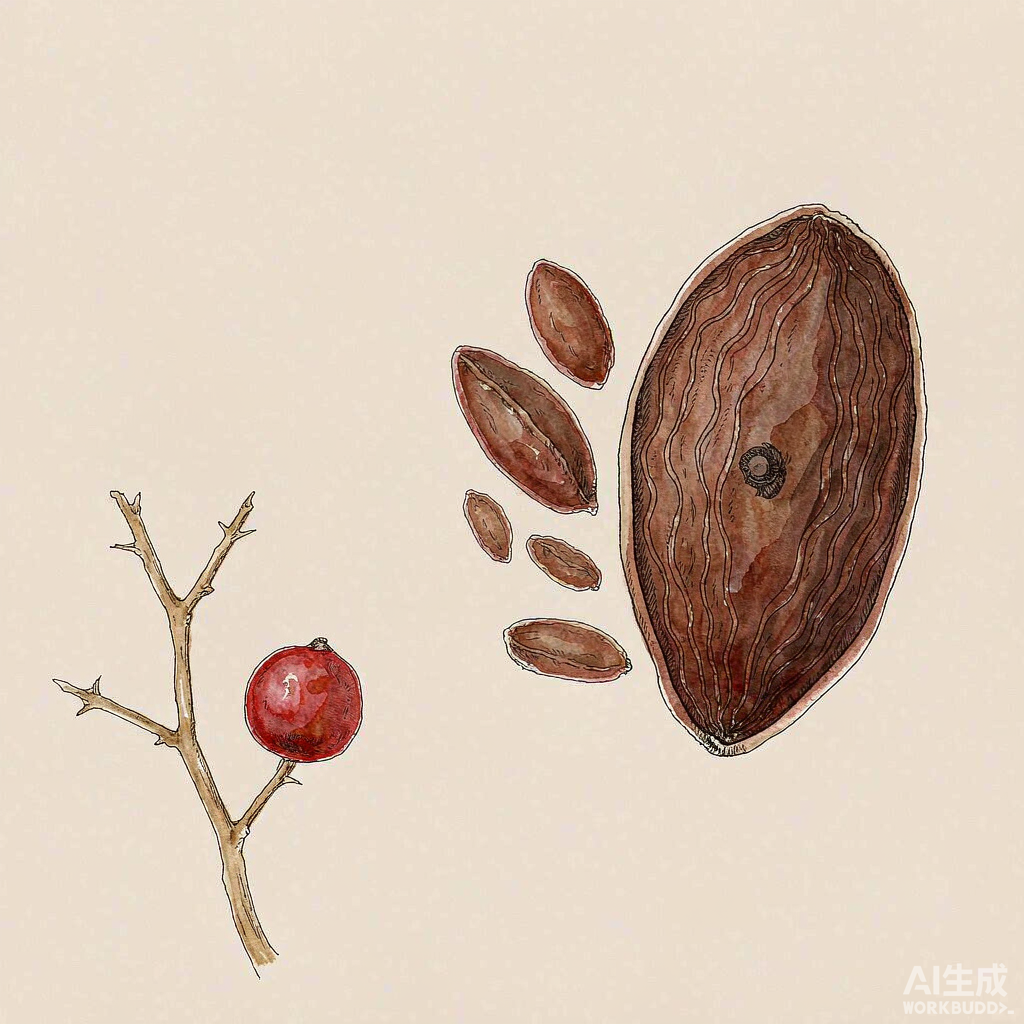
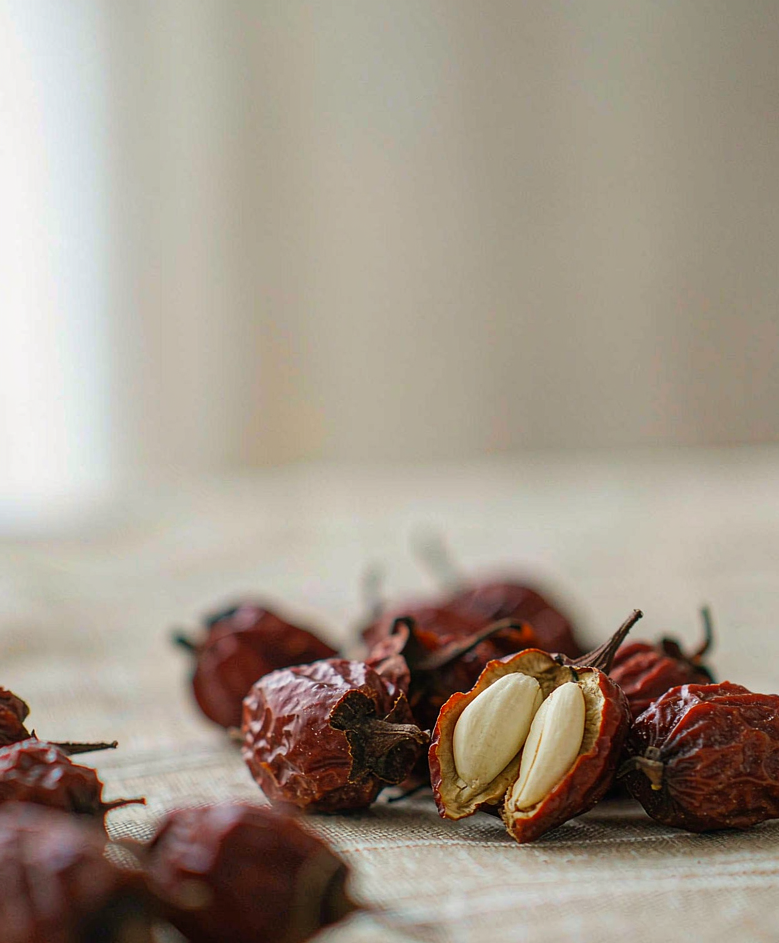
Suanzaoren is the seed of the wild jujube (Ziziphus spinosa), a small thorny shrub of the northern Chinese highlands. For over two thousand years it has been part of Chinese food and herbal tradition — a quiet, kitchen-friendly seed most often reached for at the close of the day. In our blends it keeps that same role: a grounding note in an evening ritual, not a remedy.
In the old texts
Suanzaoren has sat at the crossroads of Chinese food and medicine for over two thousand years. The Shennong Bencao Jing (circa 1st–2nd century AD), the earliest Chinese materia medica, names the sour jujube plant — whose seed we use — as one that “settles the five organs and lightens the body with long use.” The Mingyi Bielu (attributed to Tao Hongjing) credits the seed with easing “a restless heart that cannot sleep.” Centuries later, Li Shizhen’s Compendium of Materia Medica (1593) records that the prepared seed is valued in night-time rituals for its quietly calming character.
Today suanzaoren is listed among China’s first batch of “medicine-and-food homologous” substances — a seed equally at home in the kitchen and the herbal cabinet.
What research explores
These studies explore the seed’s traditional calming properties. They are not a claim about any LUMÉ product.
In our blends
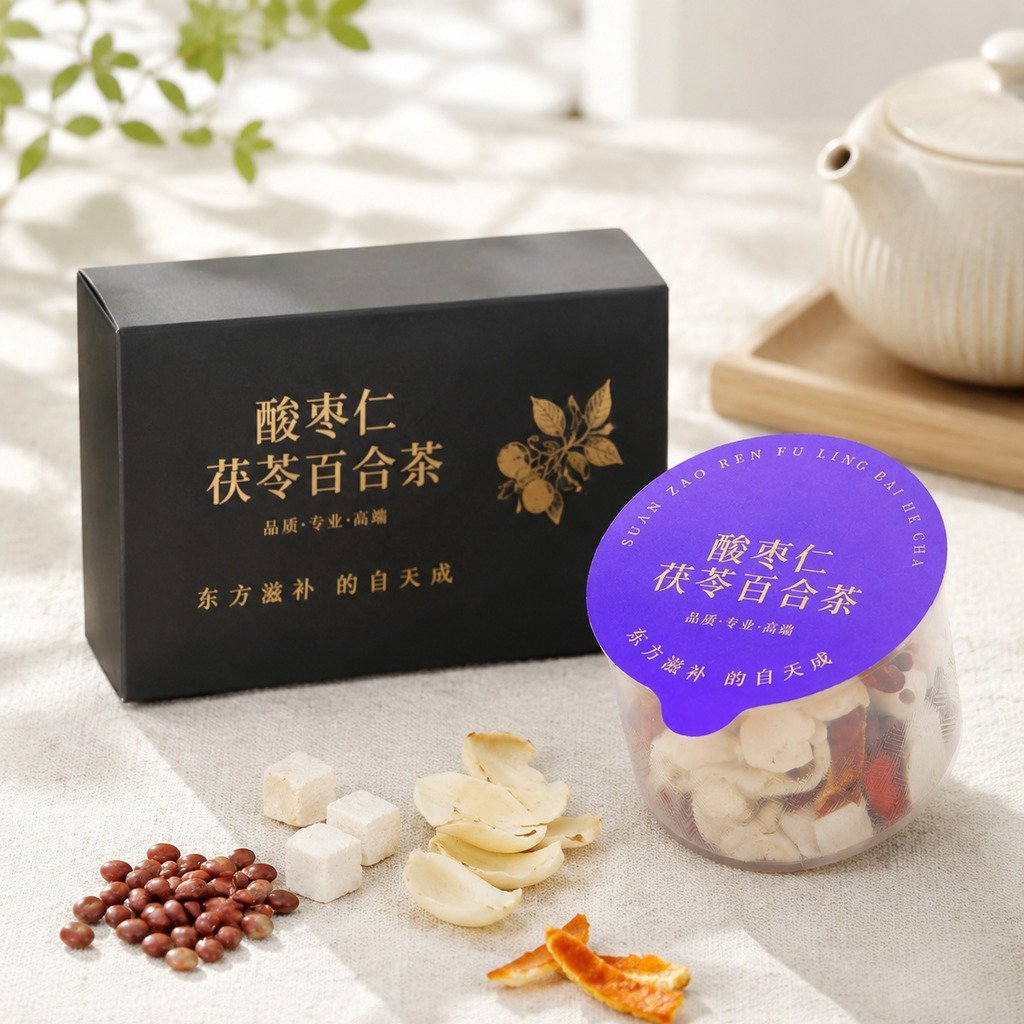
Suanzaoren is the namesake herb of Night Calm, our evening wind-down tea. Alongside lily bulb, poria and lotus seed, it gives the cup its “close-the-day” character — no forcing, just permission for the day to end.
How to enjoy
Steep one mini tin in 90°C water for 4–5 minutes. Dim the lights, put the phone face-down, and let the day close the way you’d close a book.
Related herbs
Lily Bulb →Poria →Lotus Seed →
FAQ
Is suanzaoren a medicine? In China it is a traditional botanical recognized as both food and herb. In our teas it is a food ingredient — a ritual, not a remedy.
What is suanzaoren used for in traditional practice? In Chinese herbal tradition the seed is valued as a calming, nourishing botanical — often prepared as a warm decoction, and today, steeped into an evening tea.
Can I enjoy it every day? Many make it a nightly wind-down ritual. As with any botanical, listen to your body and enjoy it as part of a balanced routine.
Shared for cultural and culinary interest and reviewed for accuracy by our TCM advisor. Not medical advice.