中秋。 The moon is at its fullest; the table is set for reunion.
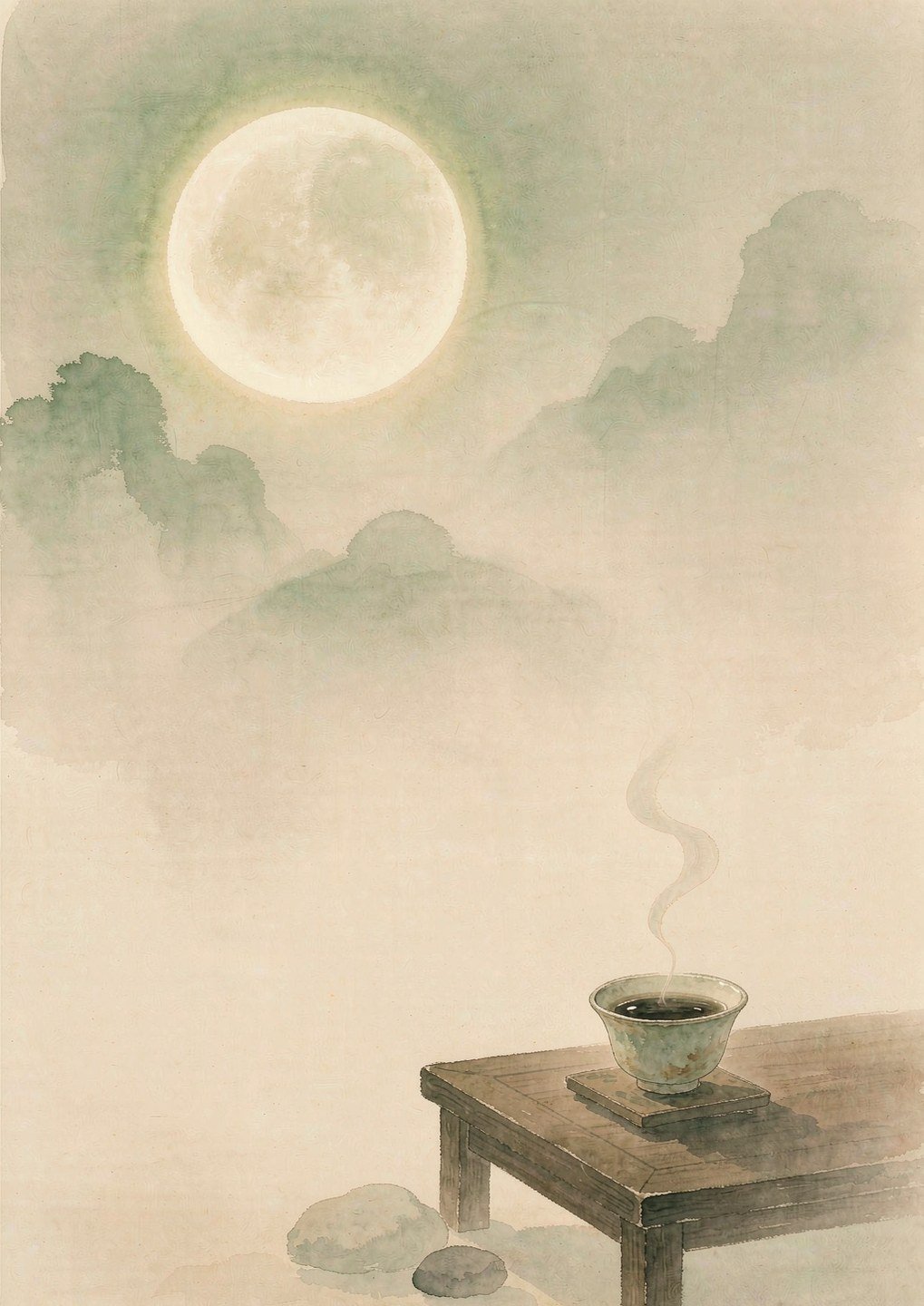
The Mid-Autumn Festival (中秋节, Zhōngqiūjié) arrives on the 15th day of the eighth lunar month — the night of the year’s brightest full moon. In 2026, it falls on Friday, 25 September. While it is not a public holiday in Singapore, the weeks leading up to it become one of the most gifting-heavy moments of the year. Mooncakes are exchanged between family, friends, and colleagues; lanterns illuminate Chinatown and Gardens by the Bay; and in many homes, the evening still ends in the traditional way — with a pot of tea, poured slowly under the moonlight.
This is a small, unhurried guide to the festival: its origins, how Singapore observes it, and why tea has been a constant companion to this night for centuries.
1. At a Glance: The Offering Table
Under the full moon, tradition sets three things on the table:
- Mooncakes (月饼, yuèbǐng) — the festival’s signature pastry, shared after dinner or given as a gesture of regard.
- Pomelos (柚子, yòuzi) — a fruit in season at this precise moment, prized for its roundness.
- Tea (茶, chá) — the third companion. Poured throughout the evening, it is the element of the table that lingers longest.
The tradition honours Chang’e (嫦娥), the moon goddess. Most households today keep these offerings as a cultural habit rather than a formal ceremony. The spirit of the night remains the same: sweet flavours, round shapes, and something warm to drink.
2. Where the Festival Comes From
The name 中秋 (Zhōngqiū) translates simply to “middle of autumn.” The festival marks the midpoint of the season, the moment the year begins to deepen. The 15th day is the centre of the lunar month, when the moon reaches its most luminous state.
In Chinese culture, that roundness is symbolic. The character 圆 — round — is shared with 团圆, reunion. A full moon represents completeness, and the festival’s central theme is gathering. It is about the same moon, seen at the same hour, by people who may be far apart.
3. The Story & Its Meaning
Legend tells of the moon goddess, Chang’e, who drank the elixir of immortality and ascended to live in the moon palace. She remains there, close enough to watch over the world, but forever apart from it.
Perhaps this is why the festival’s most enduring poetry speaks of distance and togetherness. The Tang-dynasty poet Zhang Jiuling wrote:
海上生明月,天涯共此时。
Above the sea the bright moon rises; at this hour, across the world, we share it.
These words are still sent in messages to family and friends far away. They explain why a gift of tea feels appropriate for the season: it is an invitation to share a quiet moment at the same hour, even from a distance.
4. Mid-Autumn in Singapore, 2026
The festival is marked across the island, though it is not a public holiday in Singapore. Most will work through Friday, 25 September, but the atmosphere of the city changes in the fortnight before.
Singapore begins to dress for the festival in mid-September:
- Chinatown — The main light-up spans New Bridge Road, Eu Tong Sen Street, and South Bridge Road. In 2026, it runs from 18 September into late October, featuring stage performances and the community lantern walk at Kreta Ayer Square.
- Gardens by the Bay — Large-scale themed lantern installations are set against the evening sky.
- Jurong Lake Gardens — “Lights by the Lake” offers a quieter alternative, with fewer crowds and a long view over the water.
- Sun Yat Sen Nanyang Memorial Hall — The Wan Qing Mid-Autumn Festival is often centred on a single artist’s installation.
While these venues offer public celebration, the heart of the festival remains at home. It is found in a few mooncakes, a pot of tea, and a conversation that lasts late into the night. This season of cooling air began with Báilù, the time of the white dew.
5. The Quiet Art of Gifting
The circle of gifting at Mid-Autumn is wide. It includes parents, elders, extended family, business associates, and the friends who support us throughout the year. Mooncakes are the traditional choice, and they remain a beautiful way to share the festival.
However, tea is a natural partner to the mooncake box, often given alongside it:
- For parents and elders — A tea with a mellow finish that can be enjoyed slowly over several steepings.
- For business associates — A well-crafted tea in a minimalist tin carries a sense of respect and restraint.
- For friends — A new blend or a different profile to be discovered together.
Tea is a practical gift; it keeps well and complements the sweetness of the festival table. The typical window for gifting begins about two weeks before the festival, as the city’s energy starts to build.
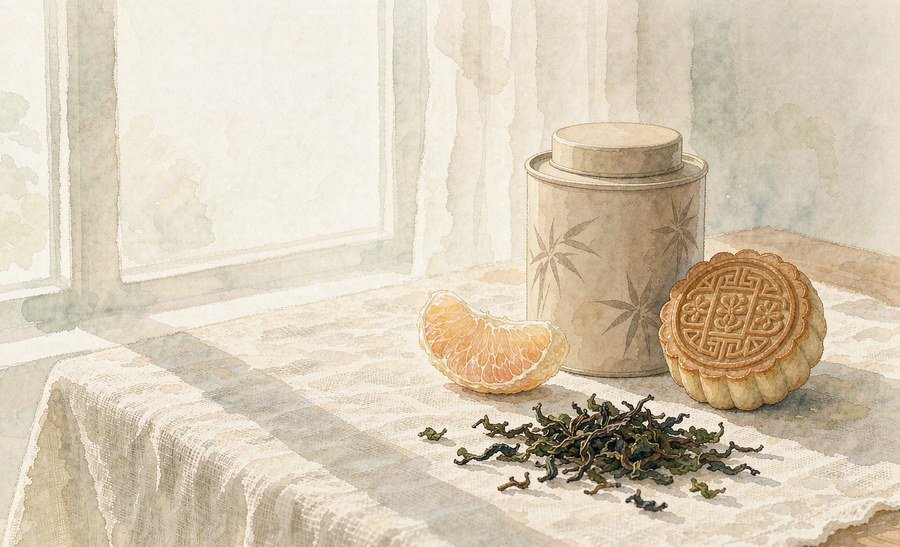
Tea is the companion at the table, not the loudest voice on it.
6. Your Lume Moment
If you are observing the festival at home, a simple tea ritual can anchor the evening once the mooncakes are served.
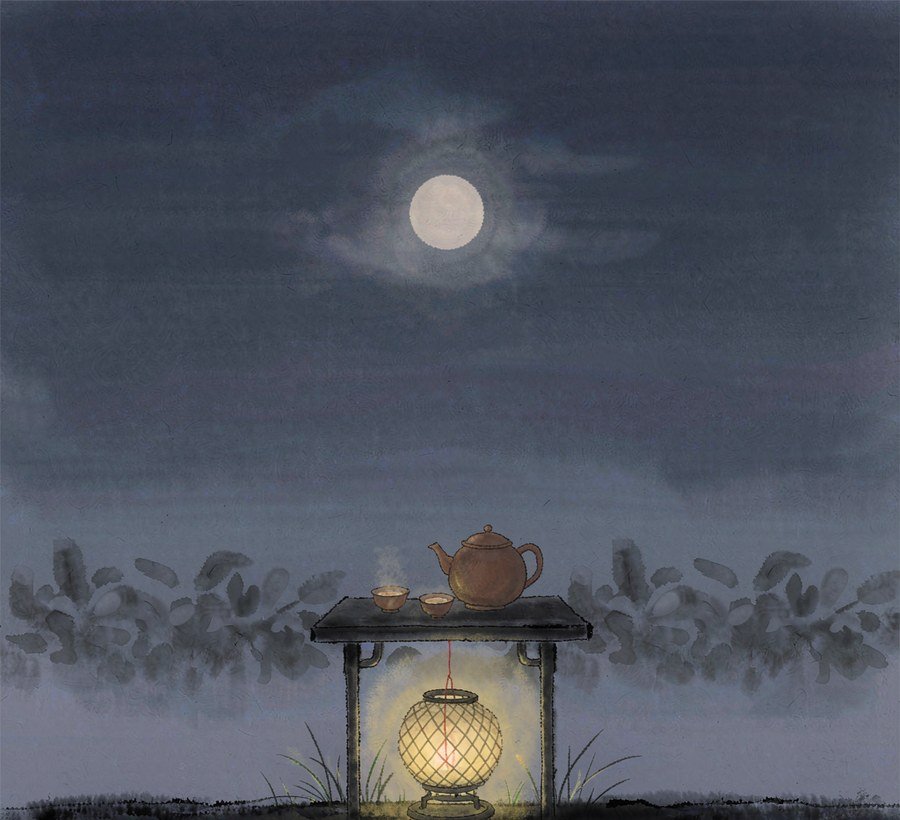
Choose a blend that is gentle on the palate, lightly sweet or mellow. Warm your teapot, add the leaves, and pour water just off the boil. Let it steep for four or five minutes. Pour thin, into small cups, and set the pot beside the mooncakes — not above them.
Then take it to wherever the moon is. Many people keep one pot of tea on the night of the full moon — the same hour, the same quiet — and that is enough.
At LUMÉ, we view herbal tea as a staple of the everyday table. We consider what to brew as the air turns, what to share on slow evenings, and what to give when you want a gesture to be thoughtful rather than loud. Mid-Autumn is the night the year confirms this: tea belongs at this table.
If you are curious about the seasonal rhythms that lead to nights like these, our journal tracks the year — one entry for each solar term, and occasional notes for the festivals in between. You are welcome to wander through it anytime.
7. Frequently Asked Questions
When is the Mid-Autumn Festival in 2026? Friday, 25 September 2026. The festival is observed on the 15th day of the eighth lunar month, meaning the date changes annually on the Gregorian calendar.
Is the Mid-Autumn Festival a public holiday in Singapore? No. While it is a major cultural event, particularly for Chinese Singaporeans, it is a regular working day.
What goes on the traditional Mid-Autumn offering table? The traditional offerings are mooncakes, pomelos, and tea. These are historically associated with the moon goddess, Chang’e.
Where can I see lanterns in Singapore in 2026? The primary displays are in Chinatown, Gardens by the Bay, and Jurong Lake Gardens. The Sun Yat Sen Nanyang Memorial Hall also hosts an annual festival.
What can I give at Mid-Autumn besides mooncakes? A gentle herbal tea is a thoughtful alternative. It travels well, sits easily beside the mooncake plate, and suits a late evening under the moon.