Poria
Poria cocos
Fu Ling · 茯苓
Poria is the quiet, spongy heart of the old pine — a gentle, grounding note that has anchored Chinese kitchens and herbal cabinets for nearly two thousand years, and a soft supporting presence in our evening blends.
What is Poria?
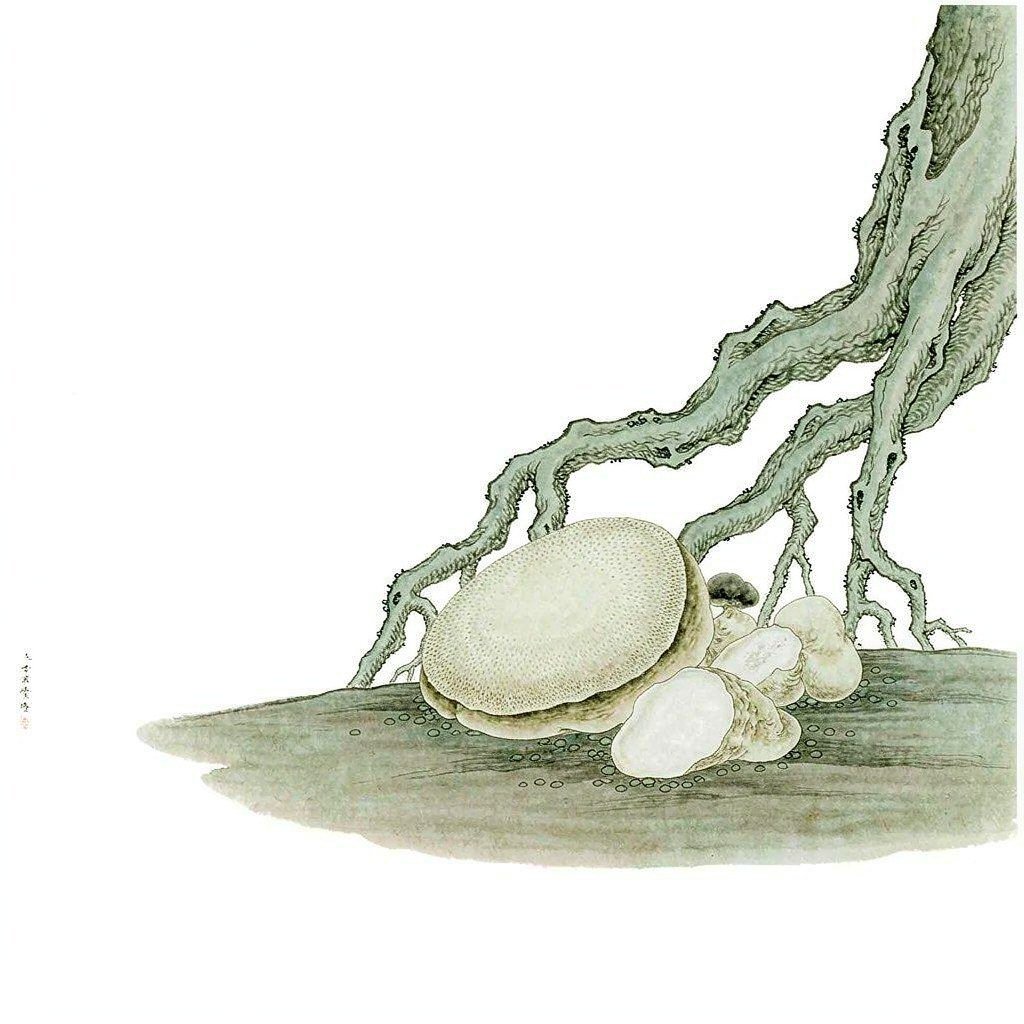
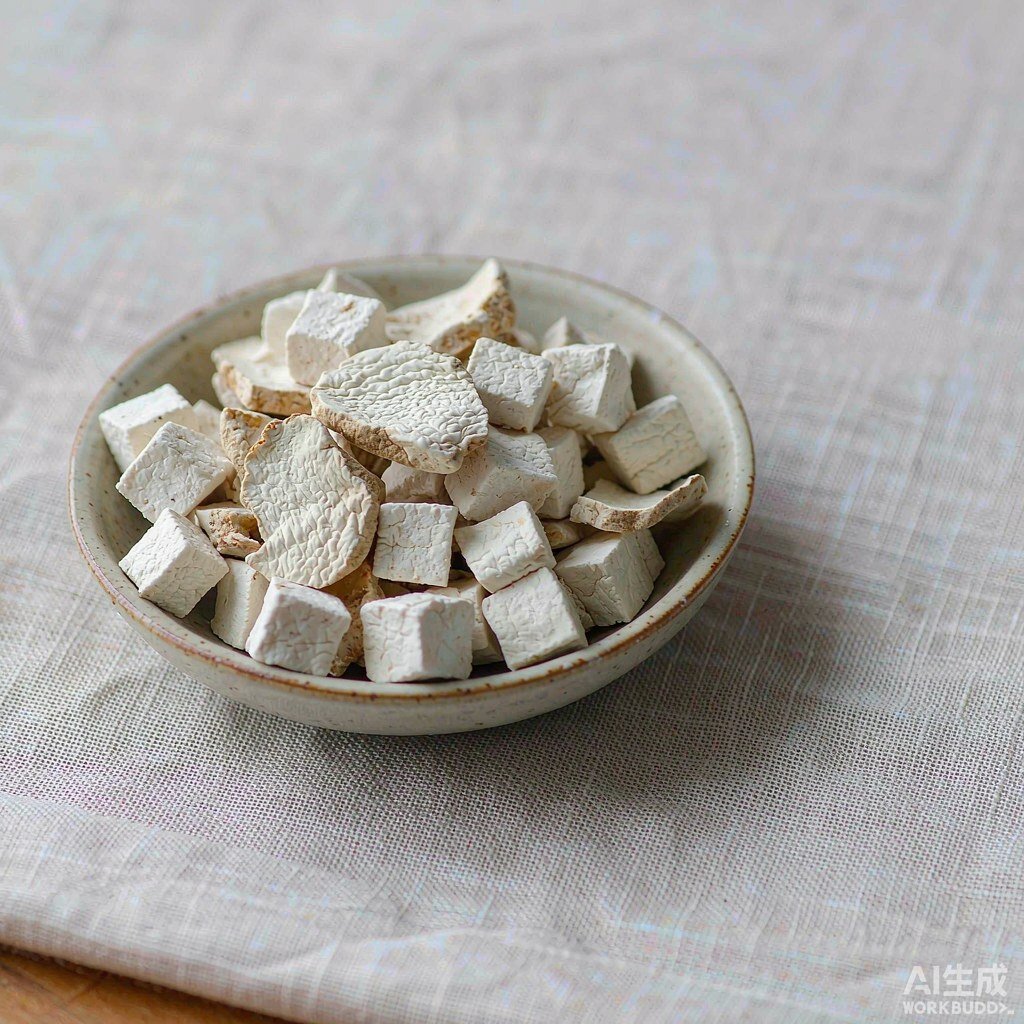
Poria — known in Chinese as fu ling (茯苓) — is not a root or a leaf, but the dense, pale underground mass (a sclerotium) of a fungus that grows wrapped around the roots of old pine trees. For nearly two thousand years it has been part of Chinese food and herbal tradition: a soft, neutral, kitchen-friendly ingredient most often used to lend a calm, settling note to a broth, a congee, or a cup. In our blends it plays the same quiet role — a grounding note, never a remedy.
In the old texts
Poria has sat among China’s most cherished botanicals for close to two millennia. The Shennong Bencao Jing (circa 1st–2nd century AD), the earliest Chinese materia medica, lists fu ling as a top-grade (上品) substance, writing that with long use it “settles the spirit and nourishes the mind, and keeps one from hunger while lengthening the years” (久服安魂养神,不饥延年). Centuries later, Li Shizhen’s Compendium of Materia Medica (1593) notes that the form grown around the pine root is called fu shen (茯神), and records the fungus’s mild, balanced nature — the reason it became a familiar, everyday presence in the Chinese pantry rather than a rare medicine.
Today fu ling is listed among China’s first batch of “medicine-and-food homologous” substances — equally at home in the kitchen and the herbal cabinet.
What research explores
These studies explore the fungus’s traditional character. They are not a claim about any LUMÉ product.
In our blends
Poria is a shared herb across two of our blends. In Night Calm it sits beside suanzaoren, lily bulb and lotus seed as a gentle, grounding base; in Root Balance it pairs with hairy fig and adzuki bean for an everyday, down-to-earth cup. In both it is there for character, not for a promise.
Night Calm
Suanzaoren · Poria · Lily sleep tea
Shop the blend
Root Balance
Hairy Fig & Poria balancing tea
Shop the blend
How to enjoy
Poria comes to you inside our blends — just steep one mini tin in 90°C water for 4–5 minutes. Let it be the unhurried part of the evening: dim the lights, set the phone aside, and let the day soften.
Related herbs
Suanzaoren →Lily Bulb →Hairy Fig →
FAQ
Is poria a medicine? In China fu ling is a traditional botanical recognized as both food and herb (listed among the medicine-and-food homologous substances). In our teas it is a food ingredient — a ritual, not a remedy.
What is poria used for in traditional practice? In Chinese culinary and herbal tradition the pine fungus is valued as a mild, settling ingredient — long simmered into soups and congees, and today steeped into a calming cup.
Can I enjoy it every day? Many keep it as a daily, grounding ritual. As with any botanical, enjoy it as part of a balanced routine.
Shared for cultural and culinary interest and reviewed for accuracy by our TCM advisor. Not medical advice.