Red Ginseng
Panax ginseng (red ginseng = the steamed & dried root)
Hong Shen · 红参
Red ginseng is the warm, rounded root at the heart of several East Asian tea traditions — a gently aromatic note that, in small blended amounts, lends depth to an evening cup. At LUMÉ we use it sparingly, never as a stimulant, and always as a daily tea rather than a remedy.
What is Red Ginseng?
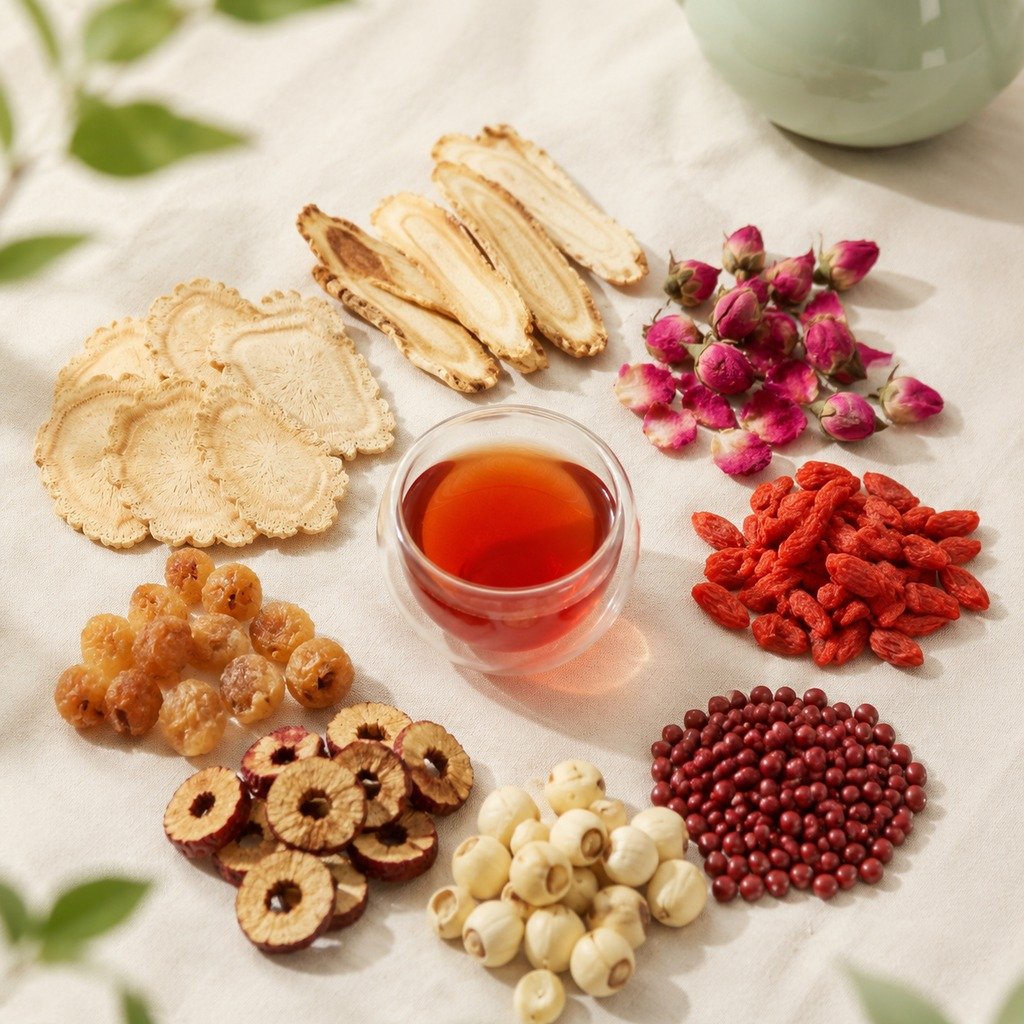
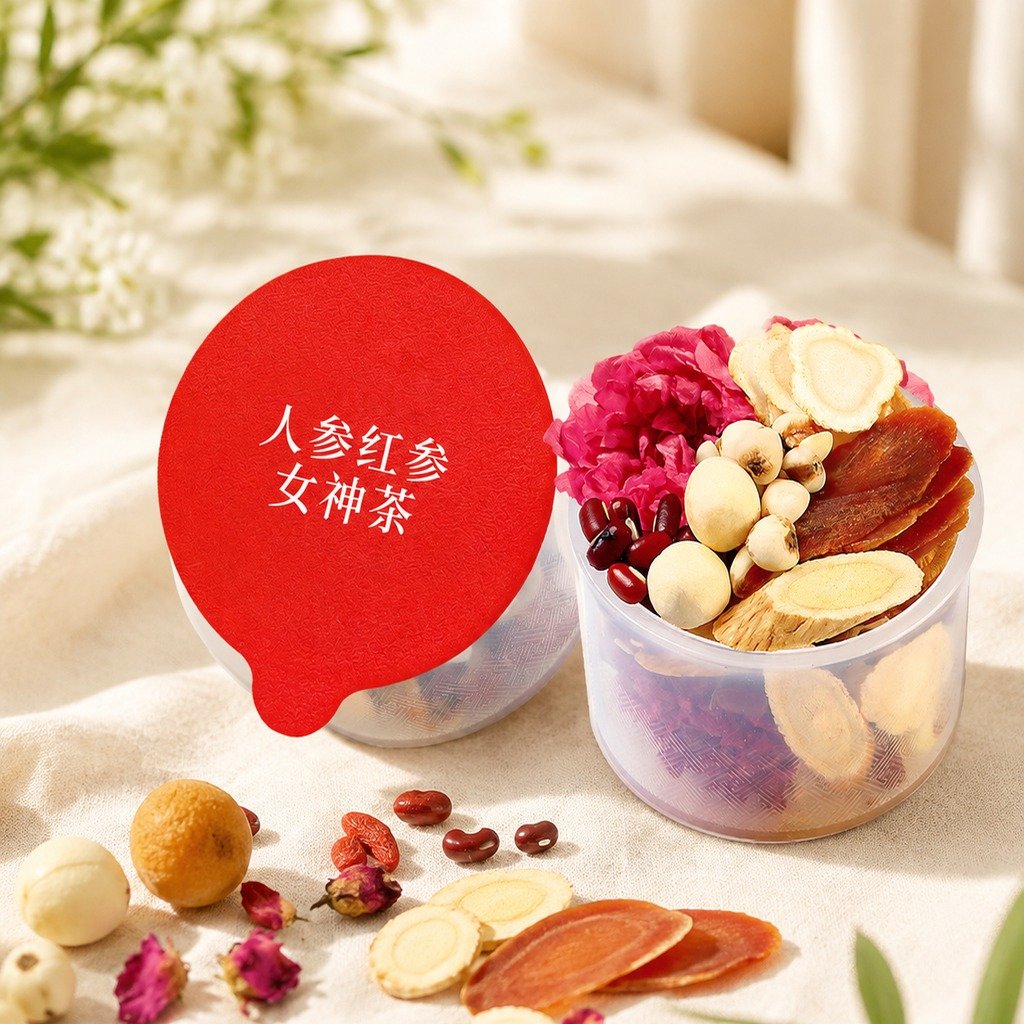
Red ginseng is the same plant as ginseng (Panax ginseng, family Araliaceae) — but after harvest the root is steamed and dried, which deepens its colour to a reddish brown and gives it a softer, rounded character. For centuries it has been a familiar, valued root across Korea, China, and Japan, showing up in kitchens, soups, and cups rather than only in the herbal cabinet. At LUMÉ we treat it as a flavour and aroma ingredient: a warm note that balances the cooler, calming botanicals in our evening blends. It is there for the cup, not as a claim.
In the old texts
Ginseng has been among the most prized roots in East Asian tradition for close to two thousand years, and red ginseng — the steamed form — is a well-documented part of that lineage. Classical Chinese materia medica note ren shen (人参) and describe red ginseng (红参) simply as the cultivated ginseng root that has been steamed and dried (人参栽培品经蒸制后的干燥根). We share this as cultural background, not as a statement about what a cup of tea will do. LUMÉ presents red ginseng as a tea ingredient with a long, interesting history — never as medicine.
Red ginseng is listed among China’s “medicine-and-food homologous” substances, meaning it sits comfortably in both the kitchen and the herbal tradition. We use it in food-grade amounts as a tea component.
What research explores
In our blends
Red ginseng appears in two LUMÉ evening teas, always blended with calming companions and used in gentle amounts:
Both are daily herbal beverages, not medicinal products or treatments.
How to enjoy
Use one sachet or scoop per cup with water just off the boil (around 90°C). Steep 4–5 minutes, cover the cup to keep the aroma in, and sip slowly in the evening. Because red ginseng is traditionally described as warm, we keep it to a small amount and pair it with cooling, calming herbs — a balance that suits a quiet night, not a jolt. If you are sensitive to warming roots, notice how an evening cup sits with you and adjust to taste.
Related herbs
Suanzaoren (sour jujube seed)Poria (fu ling)All Meet the Herbs
FAQ
Is it okay to drink red ginseng tea at night?
For most people, yes — in the small, blended amounts LUMÉ uses, red ginseng is a warm, comforting note rather than a stimulant. We pair it with calming herbs and position our evening teas as daily rituals, never as energisers. If you are sensitive to warming roots or to caffeine, watch how an evening cup feels and adjust; our blends are caffeine-free. LUMÉ teas are beverages, not treatments.
What exactly is red ginseng?
It is the root of Panax ginseng that has been steamed and dried, a traditional processing that gives it a reddish colour and a softer, rounded character. It is a familiar food-grade botanical across East Asia.
Does LUMÉ claim red ginseng does anything for me?
No. We use it for flavour, aroma, and tradition, in gentle amounts. We make no invigorating or therapeutic claims, and every LUMÉ tea carries the line: a daily herbal tea, not a medicinal product or treatment.
Shared for cultural and culinary interest. Red ginseng is a food-grade botanical with a long East Asian history; this page is not medical advice.