秋分。 Day and night stand even; for one day, the year holds level.
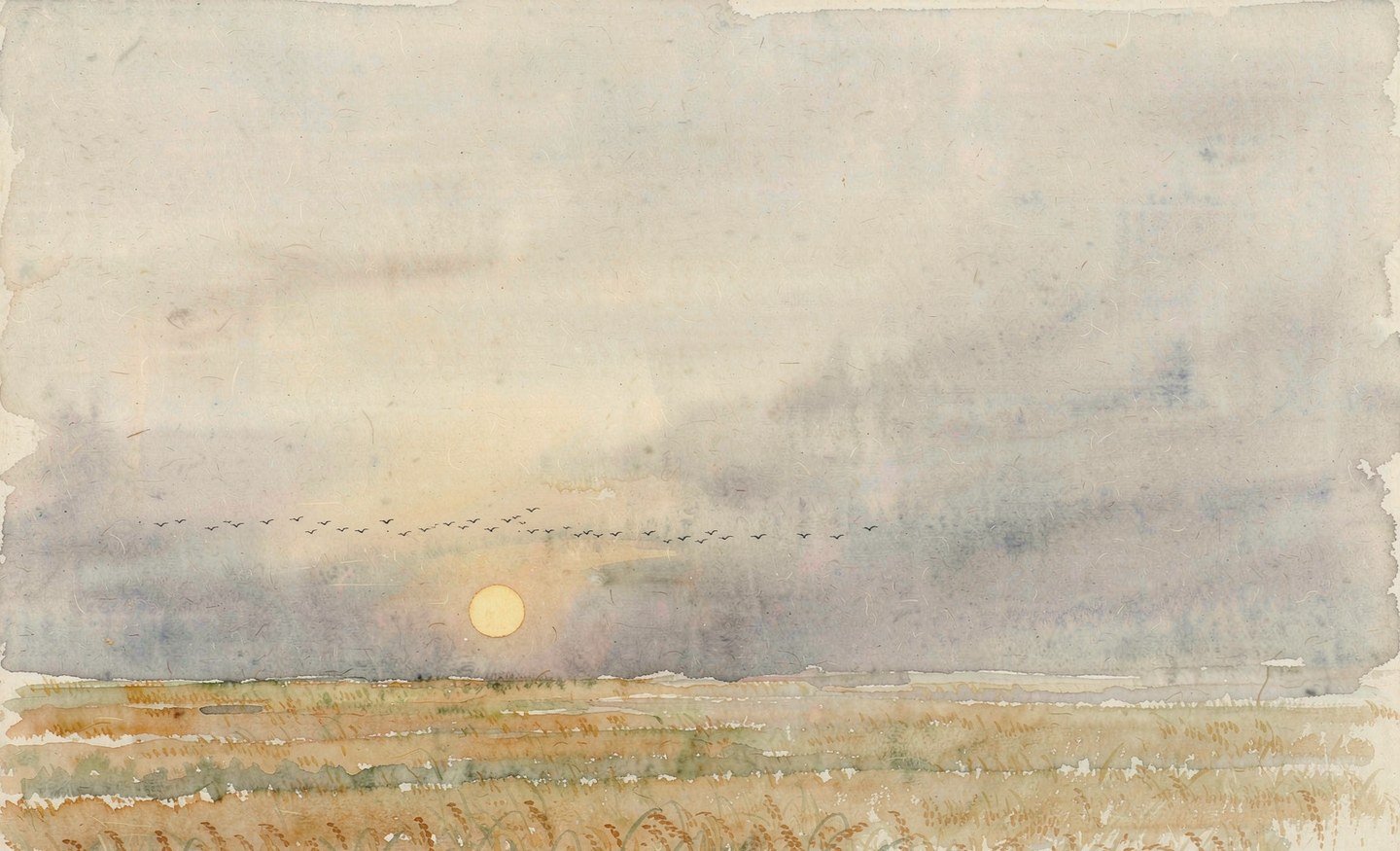
Qiūfēn (秋分) — “Autumn Equinox” — is the 16th of China’s 24 solar terms and the fourth term of autumn. In 2026, it begins on September 23. On this day the sun sits almost directly above the equator, and light and darkness are near enough equal: twelve hours of each, nearly everywhere on earth.
The word “fēn” (分) means “half,” and Qiūfēn is halfway in two senses at once. It divides the day evenly between light and dark, and it sits at the midpoint of autumn — the middle of the ninety days that run from the first day of autumn to the last.
From here, the sun keeps travelling south. Across the northern hemisphere the nights grow longer than the days, and the air cools a little more with each passing night.
TL;DR — Qiūfēn (Autumn Equinox) at a Glance
Qiūfēn (秋分), the Autumn Equinox, is the 16th of China’s 24 solar terms and the fourth term of autumn, beginning 23 September 2026. On this day the sun sits over the equator and day and night are almost exactly equal — the one day the year holds level. LUMÉ is a Hong Kong–based tea house; we pair the season with a slow, caffeine-free evening tea ritual rather than any remedy. All LUMÉ teas are daily herbal beverages, not medicinal products or treatments.
One day out of the year when light and dark stand perfectly even.
1. At a Glance: Three Signs of Quieting
Ancient observers divided Qiūfēn into three signs. Each one is a form of quieting:
- First sign: The thunder falls silent. Thunder was thought to sound because the season’s bright, active force was at its height; by the eighth month, that force has begun to give way. An old almanac puts it this way: thunder speaks in the second month and falls silent in the eighth — “entering the earth, and the ten thousand things follow it in.”
- Second sign: The insects seal their burrows. As the air cools, the small creatures that winter underground retreat into their holes and pack fine earth around the entrance, narrowing the opening against the cold.
- Third sign: The water begins to dry up. Rainfall tapers off, the air turns dry, and rivers, lakes and standing pools slowly shrink.
Taken together, the three signs describe a single movement: sound withdraws, openings close, water recedes. The world grows quieter, and turns inward.
Three signs, all a form of quieting: the thunder falls silent · the insects seal their burrows with fine earth · the water begins to dry up.
Qiūfēn at a Glance: Key Facts
| Solar term | 16th of the 24 solar terms; 4th of autumn |
| 2026 start date | 23 September |
| Celestial position | Sun at 180° longitude |
| What happens | Day and night near-equal; nights grow longer after |
| Traditional three signs | Thunder falls silent · insects seal burrows · water dries up |
| Modern observance | China’s Farmers’ Harvest Festival (since 2018) |
2. Where It Comes From
Qiūfēn begins when the sun reaches 180° celestial longitude — sixteen days after Báilù, the term when dew first beads white on the grass.
An old almanac explains the name in a single line: “Fēn means half — this falls at the midway point of the ninety days, and so it is called fēn.” The ninety days are those of autumn as the old calendar counts it, from its first day to its last.
A Han dynasty text puts the same idea more beautifully: “At Qiūfēn, the two forces stand half and half — so day and night are equal, and heat and cold are level.”
Qiūfēn belongs to a small and very old group. Along with the spring equinox and the two solstices, it is one of the four hinge points of the solar year, and among the first that early observers identified.
One more custom is worth knowing. In the old ritual calendar, the two days of equal light were also the days to check the measures — the rules, the steelyard weights, the bushels. A day on which light and darkness balance was the natural day to make sure everything else balanced too.
Think of the 24 solar terms as 24 waypoints on a nature calendar — Qiūfēn is the one day the year holds perfectly level.
3. The Story & Its Meaning
金气秋分,风清露冷秋期半。凉蟾光满,桂子飘香远。
Metal-breath at the autumn equinox — the wind is clear, the dew is cold, autumn is half gone. The cool moon is full; the osmanthus carries its scent far.
— Xie Yi, Dian Jiang Chun (Song dynasty)
Four short lines, and the whole night is in them: clear wind, cold dew, a full and cooling moon, and osmanthus carrying its scent a long way.
The meaning of Qiūfēn rests on a single idea: evenness. Not dullness — balance. Of all the days in a year, only two hold daylight and darkness at exactly the same length: the spring equinox, and this one. And the balance lasts a single day. After it, the light begins to give ground and the nights take over.
Qiūfēn was once the day for honouring the moon. An old saying pairs the two halves of the year: the sun was honoured in spring, the moon in autumn, and the rites fell on the equinoxes. But Qiūfēn falls on a different lunar date each year, and there was no guarantee of a full moon on the day. Honouring the moon without a moon proved disappointing, so the observance moved to the fifteenth day of the eighth lunar month — which is how the Mid-Autumn Festival came to be.
In modern times the day has taken on a second life. Since 2018, it has been marked in China as the Farmers’ Harvest Festival — which falls, after all, exactly when rice ripens and osmanthus opens.
4. The Energy of the Season
From Qiūfēn onward, the rhythm of the year moves from gathering in toward storing away. The thunder stops, the insects close their doors, the water draws back from the banks. Everything dials back a notch: sound, movement, spending.
Traditionally this is not a season for piling things on. It is a season of evenness: no extremes, no excess, no leaning too far in one direction.
Seen as a way of living, it is an invitation to draw back some of the outward energy that summer asked for, and let it settle closer to home. Not an instruction to do less — more a reminder that effort, too, wants a measure.
A season that asks for balance — not more, not less, just evenly.
5. How to Live With It
Here in Singapore, the equinox is something you read about rather than feel. So near the equator, day and night stay close to equal all year round, and the light barely changes. What travels is the idea, not the daylight.
Nothing dramatic is required. A few simple, seasonal shifts are often enough:
- Follow the light. The nights now outlast the days. When you can, rise with the morning, and let the evenings close a little earlier.
- Eat what the season brings. Osmanthus, pomegranate, pomelo, pumpkin and taro all come into their own just now. In old Yangtze delta households, osmanthus went into cakes, into candied lotus root, into a sweet chestnut soup.
- Try standing an egg on end. There is a saying: at Qiūfēn, even eggs stand up straight. Whether or not the trick holds, it is a pleasing way to spend five minutes on the one day the year runs level.
- Keep one stretch of the day even. Only twice a year are light and dark the same length. At the seam between the two, leave yourself a gap that is neither long nor short — no screens, and nothing you have to get to.
6. Your Lume Moment
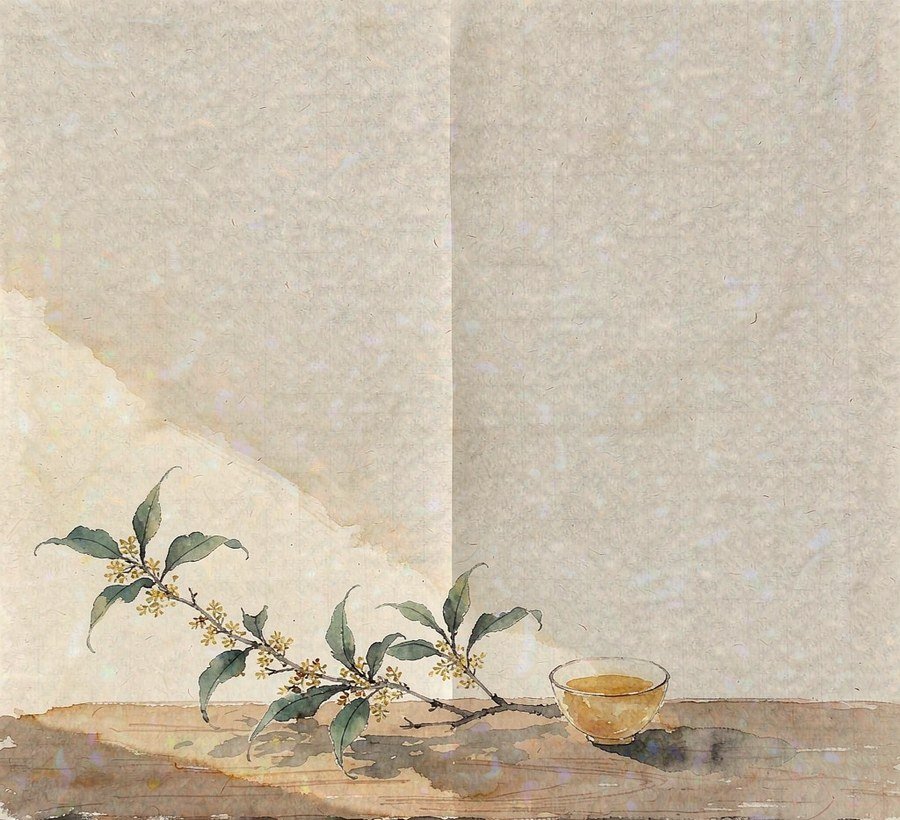
The evenings around Qiūfēn are among the best of the year for simply sitting down. The scent of osmanthus carries, and the moon is full.
The most natural ritual of this season is to brew a warm cup of herbal tea. Our Poria & Sour Jujube Seed Tea carries an evening mood: quiet, unhurried, made for the last hour of the day.
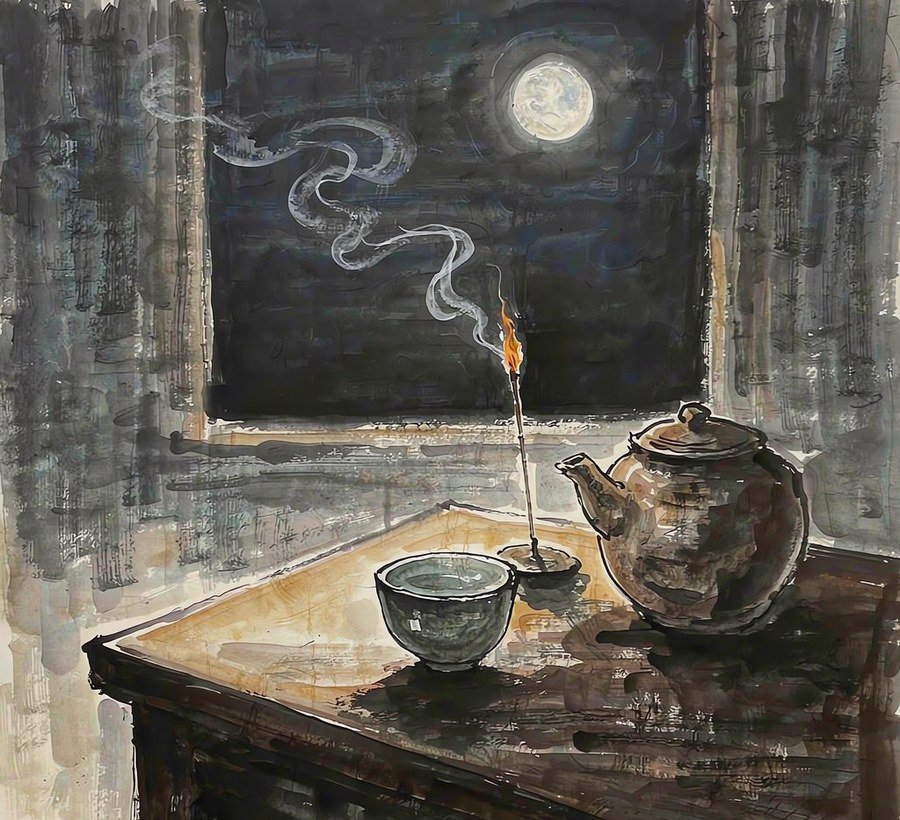
Light a single stick of incense, and let the tea and the soft thread of scent settle the room. (Our fragrance collection is launching soon; in the meantime, explore our incense collection.)
One cup of tea. One thread of scent. One evening held level.
This is what Qiūfēn quietly teaches: not more, and not less. Just enough.
Frequently Asked Questions
What is Qiūfēn (Autumn Equinox)?
Qiūfēn is the 16th of China’s 24 solar terms and the fourth of autumn. In 2026 it begins on 23 September, the day the sun crosses 180° of celestial longitude and day and night are nearly equal.
When is the autumn equinox in 2026?
23 September 2026. After this date the nights grow longer than the days across the northern hemisphere.
Why is Qiūfēn called the “half” point?
The character 分 (fēn) means “half.” Qiūfēn sits at the midpoint of autumn’s ninety days, and it also divides the day evenly between light and dark.
What are the three signs of Qiūfēn?
Ancient observers read three quieting signs: the thunder falls silent, the insects seal their burrows, and the water begins to dry up — together a picture of the world turning inward.
How is Qiūfēn connected to Mid-Autumn?
Qiūfēn was once the day for honouring the moon, but its lunar date varied and a full moon was not guaranteed. The observance moved to the fifteenth day of the eighth lunar month — which became the Mid-Autumn Festival.
Written by 波波, founder of LUMÉ — a Hong Kong–based tea house sharing slow evening rituals. Read our story →