寒露。 The dew is still there. It is simply cold now.
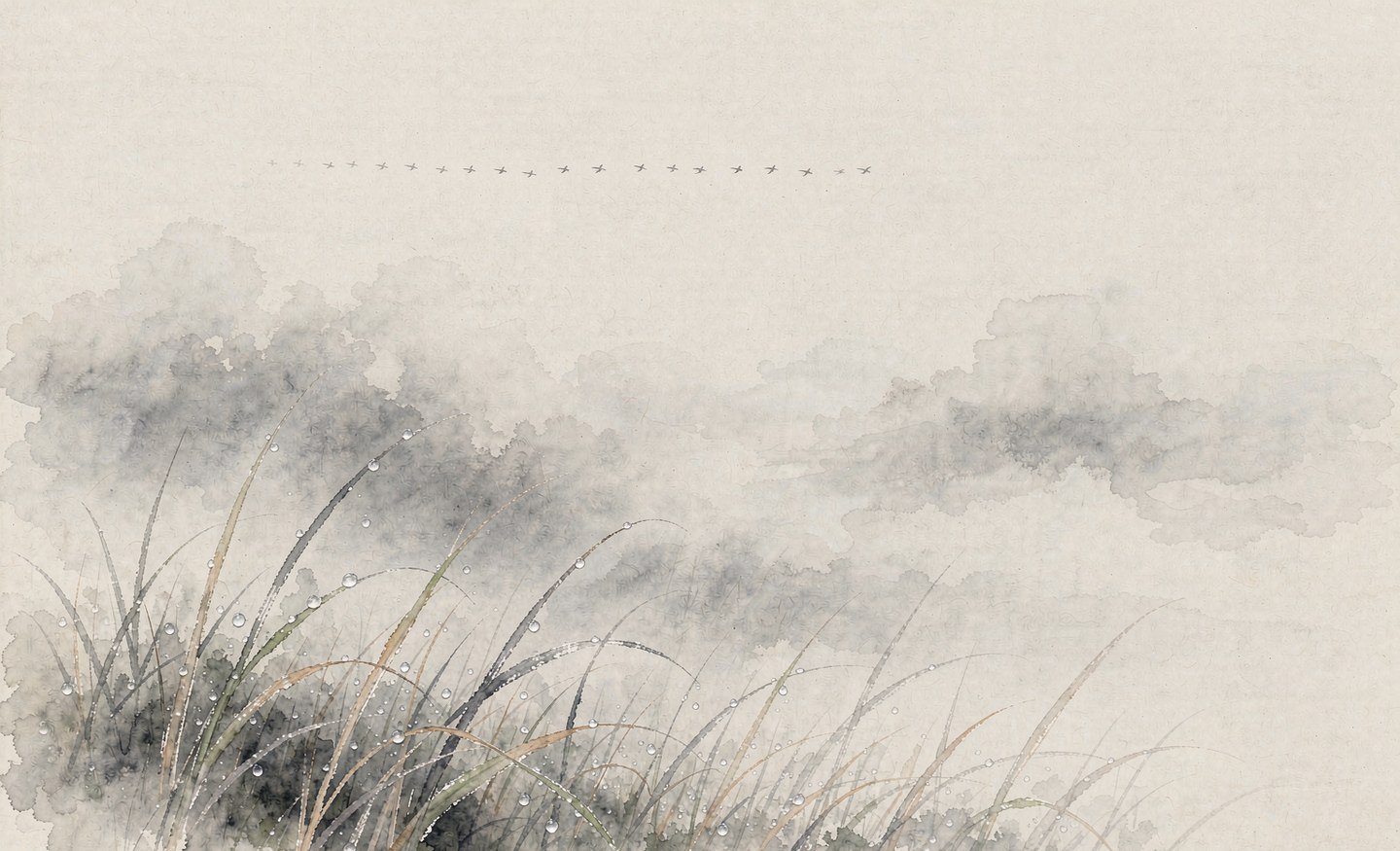
Hánlù (寒露) — “Cold Dew” — is the 17th of China’s 24 solar terms and the fifth term of autumn. In 2026, it begins on October 8. It is also the first of the twenty-four to carry the word “cold” in its name.
Fifteen days earlier was Qiūfēn, the day light and darkness stood even. A month before that was Báilù, when dew first beaded white on the grass. The dew of Hánlù is the same dew, only a step further along. An old almanac puts it simply: the dew is cold and about to condense.
The term does not announce that the weather has turned cold. It measures how cold: cold enough that the water on the grass is chilly to the touch, cold enough that frost is only one step away.
Not the moment it turns cold — the moment the cold becomes specific.
TL;DR — Hánlù (Cold Dew) at a Glance
Hánlù (寒露), Cold Dew, is the 17th of China’s 24 solar terms and the fifth term of autumn, beginning 8 October 2026. It is the first of the twenty-four to name the cold: the dew is still on the grass, only now it is chilly to the touch and about to turn to frost. LUMÉ is a Hong Kong–based tea house; we mark the season with a warm, caffeine-free evening tea ritual rather than any remedy. All LUMÉ teas are daily herbal beverages, not medicinal products or treatments.
Hánlù at a Glance: Key Facts
| Solar term | 17th of the 24 solar terms; 5th of autumn |
| 2026 start date | 8 October |
| Celestial position | Sun at 195° longitude |
| What happens | Dew turns cold on the grass; frost is one step away |
| Traditional three signs | Geese arrive as guests · small birds vanish, clams appear · chrysanthemums open yellow |
| Nearby festival | Double Ninth Festival, 10 days later (18 October 2026) |
1. At a Glance: Three Signs of Late Autumn
Ancient observers divided Hánlù into three signs. Each one moves a little deeper into the season:
- First sign: The geese arrive as guests. Wild geese fly south in long, elegant lines. The word that matters here is “guest.” The geese that arrived earlier, around the middle of autumn, are considered the hosts. The flocks that arrive now are the guests — late arrivals at a table already set.
- Second sign: The small birds vanish, and clams appear. As the temperature dips, sparrows disappear from the fields. At the same time, clams appear along the shore in great numbers, their shells striped and coloured much like a bird’s feathers. Ancient observers concluded that one had become the other: a creature of the sky had turned into a creature of the water.
- Third sign: The chrysanthemums open yellow. Most plants bloom during the lush, growing months. Chrysanthemums bloom as the light withdraws. An old almanac notes that while the blossoms of the peach or paulownia are never described by their colour, the chrysanthemum’s yellow is different. This specific yellow belongs entirely to late autumn.
Read together, the three signs all point the same way: what belongs to the sky heads south, what belongs to the fields slips under water, and one lone flower opens against the chill.
Three signs, all moving the same way: the geese arrive late, like guests · the small birds vanish and clams appear in their place · the chrysanthemums open yellow against the cold.
2. Where It Comes From
Hánlù begins when the sun reaches 195° celestial longitude.
The old almanac explains the name in a single line: “Hánlù, the ninth month’s term — the dew is cold, and about to condense.”
Báilù, Hánlù and the frost that follows are three terms named for the same water at three different temperatures. At Báilù, the dew condenses and turns white. At Hánlù, it is cold and ready to condense further. By the last of the three, it has condensed into frost. It is a single phenomenon, read three times like marks on a thermometer.
Think of the 24 solar terms as 24 waypoints on a nature calendar — Báilù is where the dew appears, and Hánlù is where it turns cold.
3. The Story & Its Meaning
寒露惊秋晚,朝看菊渐黄。千家风扫叶,万里雁随阳。
Cold Dew startles us — autumn is late. At dawn the chrysanthemums turn yellow. By a thousand doors the wind sweeps the leaves; for ten thousand miles the geese follow the sun.
— Yuan Zhen, Odes to the Twenty-Four Solar Terms (Tang dynasty)
The poem works its way neatly through the three signs: the yellowing chrysanthemum, the geese following the sun, and further on, the birds that turn to clams. It is the closest thing Hánlù has to a standard footnote.
The word to pause over is “startles.” It is not that autumn has arrived, but that autumn is nearly over. A morning glance at the chrysanthemums, turned yellow overnight, brings a sudden realisation: it is already this late in the year.
That is the meaning Hánlù carries. The season never announces itself; it shifts one notch while you are looking elsewhere. The dew is still dew, only colder. The geese are still geese, only a later flock. The flowers are at their brightest in a world that is drawing back.
The ninth lunar month is, for this reason, called the month of the chrysanthemum. And the ninth day of that month — October 18 in 2026, ten days after Hánlù — is the Double Ninth Festival. Traditionally, people climb a hill, admire the chrysanthemums, drink chrysanthemum wine, and spend the day with older relatives. Hánlù and the Double Ninth usually arrive close together, and the brightest fortnight of autumn sits between them.
4. The Energy of the Season
From the first days of autumn, the year has been doing one thing: gathering in. At Hánlù, gathering quietly becomes storing.
The geese heading south is a gathering in. The small birds disappearing is a storing away. The clams settled in the mud are tucked away. Even the flowering is not a flourish — the chrysanthemum blooms only after every other plant has left the stage.
Traditionally, this is not a season for adding more. Autumn is the time for drawing in: less spent outward, more kept close. Like the geese that arrive last — they are not the first at the table, but they are not a step behind when it is time to go.
Seen as a way of living, it is simply one notch further in from summer: ending the day a little earlier, coming home a little sooner, and keeping what is left of your energy for the things that matter. It is not a request to stop, but a reminder that in cold weather, effort is worth spending carefully.
A season for drawing in — not doing less, just spending less outwardly.
5. How to Live With It
Here in Singapore, Hánlù is a term you read about rather than feel. The nights stay too warm for cold dew to form, and no garden marks the day. What does turn up is quieter: chrysanthemums in the flower markets, and, once the ninth lunar month opens, the Double Ninth close behind.
Nothing dramatic is required. A few simple, seasonal shifts are often enough:
- Add a layer in the morning and evening. There is an old saying: after the Hánlù meal, you no longer see people in single-layer clothes. The middays still hold their warmth, but the mornings and evenings are truly cool now. Keep the ankles and the back of the neck covered.
- Eat what the season brings. Sesame, glutinous rice, honey, persimmon, Chinese yam, and lotus root all come into their own now. In old Yangtze delta households, this was the time for a pot of warm rice porridge with dates, lotus seeds, and ginkgo.
- Go and look at the chrysanthemums. The ninth lunar month is their time. Parks and flower markets are at their best right now. No expertise is required — simply standing among them for a minute is the whole activity.
- Climb to a higher vantage point. The Double Ninth falls ten days after Hánlù. Whether it is a hill, a flight of stairs, or a high floor with a window, the view from above feels different in autumn than at any other time of year.
6. Your Lume Moment
After Hánlù, the nights lengthen a little more each evening.
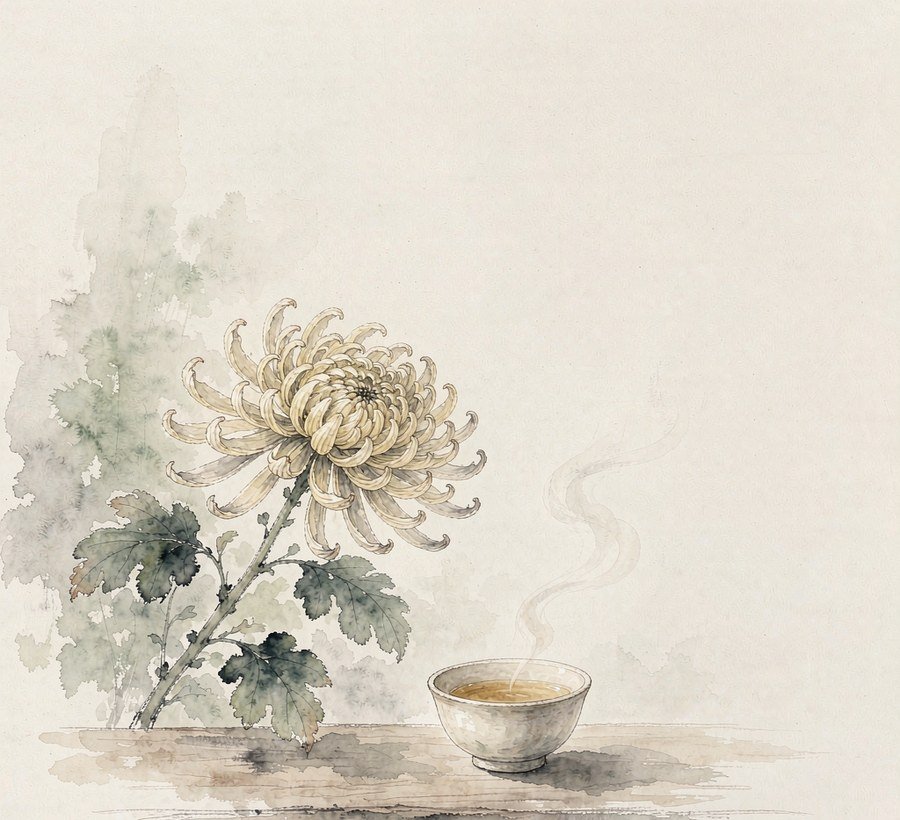
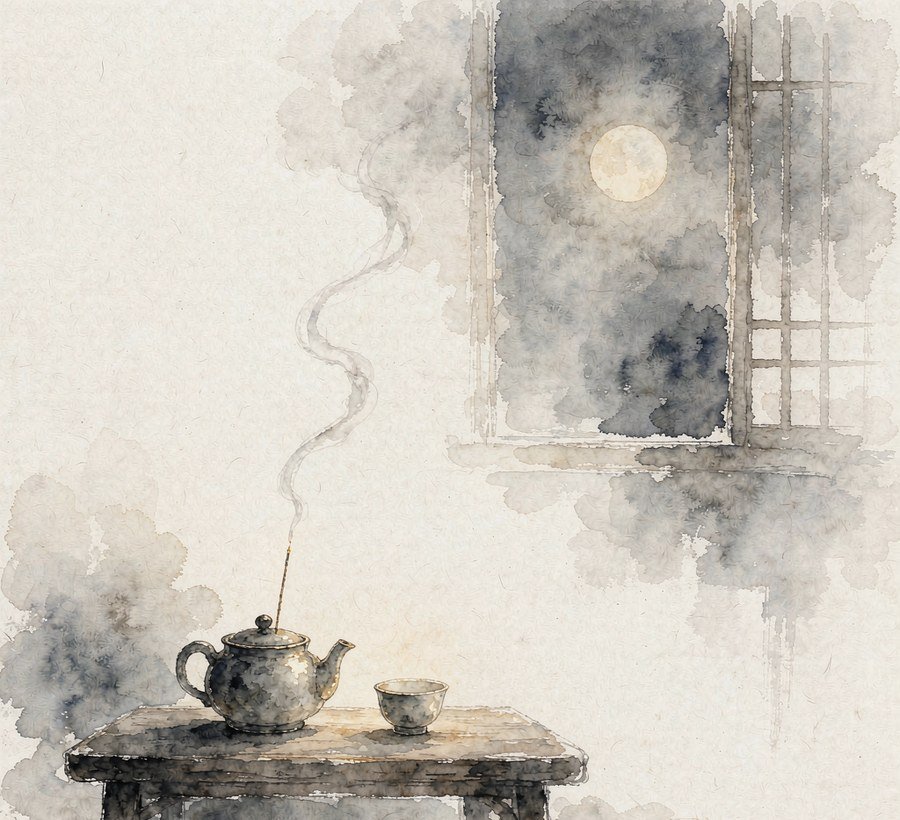
The most natural ritual of this season is to brew a warm cup of herbal tea. Families once put chrysanthemum in the pot throughout the ninth month, simply because it was the season for it. Our Poria & Sour Jujube Seed Tea carries an evening mood: quiet, unhurried, and made for the last hour of the day.
Light a single stick of incense, and let the tea and the soft thread of scent settle the room. (Our fragrance collection is launching soon; in the meantime, explore our incense collection.)
One cup of tea. One thread of scent. One evening kept close.
This is what Hánlù quietly teaches: the cold is not the enemy. With a little chill in the air, we are finally willing to turn inward.
Frequently Asked Questions
What is Hánlù (Cold Dew)?
Hánlù (寒露) is the 17th of China’s 24 solar terms and the fifth term of autumn. In 2026 it begins on 8 October — the first of the year to carry the word “cold,” when the dew on the grass turns chilly and is about to condense into frost.
When is Cold Dew in 2026?
8 October 2026. After Hánlù the days keep cooling and frost is only one step away.
Why is it called “Cold Dew”?
The old almanac names it in one line: “the dew is cold, and about to condense.” It is the middle term of three — Báilù (white dew), Hánlù (cold dew) and the frost that follows — the same water read at three temperatures.
What are the three signs of Hánlù?
Ancient observers read three signs: the wild geese arrive as guests, the small birds vanish and clams appear, and the chrysanthemums open yellow — all pointing the same way, deeper into late autumn.
How is Hánlù linked to the Double Ninth Festival?
The ninth lunar month is the month of the chrysanthemum, and the ninth day — 18 October 2026, ten days after Hánlù — is the Double Ninth Festival, when people climb, admire the chrysanthemums and drink chrysanthemum wine. Read more on Wikipedia →
Written by 波波, founder of LUMÉ — a Hong Kong–based tea house sharing slow evening rituals. Read our story →